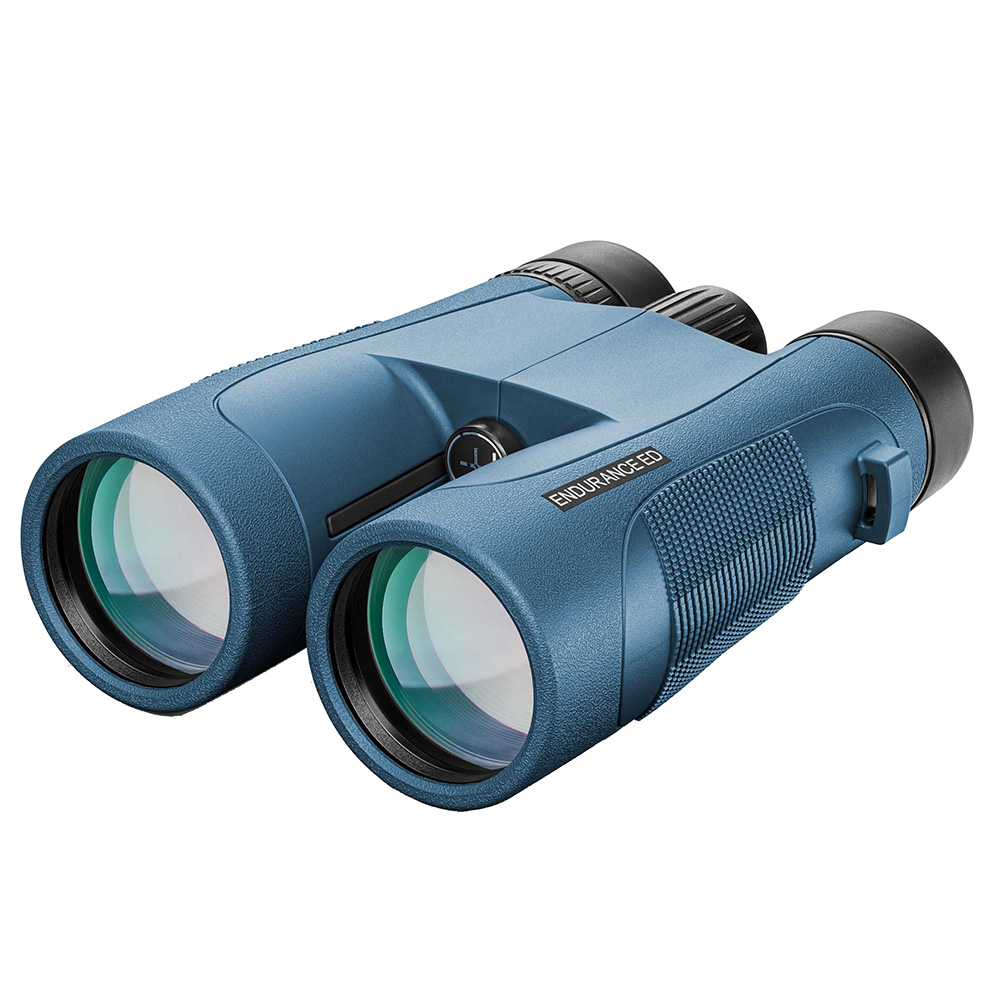
Every binocular is labeled with two numbers, such as 8x42 or 10x50. The first is magnification. The second is the diameter of each objective lens in millimeters, which decides how much light the binocular gathers.
8x or 10x
An 8x binocular gives a wider, steadier view that is easier to hold still and faster for picking up moving game in timber. A 10x brings distant animals closer for judging antlers or glassing open country, at the cost of more visible hand shake and a narrower field of view. Above 12x, most hunters need a tripod to get the full benefit.
Objective size and low light
Divide the objective size by the magnification to get the exit pupil, the beam of light that reaches your eye. An 8x42 has an exit pupil of about 5.25 mm, a 10x42 about 4.2 mm, and a 10x50 about 5 mm. Larger exit pupils look brighter at dawn and dusk, when game moves. Compact 8x21 and 10x25 models are light enough for a pocket but work best in daylight.
| Configuration | Exit pupil | Best for |
|---|---|---|
| 8x42 | 5.3 mm | Whitetail in timber, all-around use, low light |
| 10x42 | 4.2 mm | Open country, field edges, waterfowl and general glassing |
| 10x50 or 12x50 | 5.0 to 4.2 mm | Long-range glassing, often from a tripod |
| 8x21 to 10x25 | 2.5 to 2.6 mm | Packability, bright daylight, backup glass |
Glass, coatings and sealing
Extra-low dispersion (ED or HD) glass reduces color fringing and sharpens detail. Fully multi-coated lenses transmit more light. Look for a binocular that is waterproof and fog-proof, usually sealed with O-rings and purged with nitrogen or argon, because hunting glass gets rained on.
Carry it so you use it
A chest harness keeps binoculars protected and ready, and keeps them from swinging against your rifle or bow.